
A CLEARER STARTING POINT
Tax Planning vs Tax Preparation.
One looks ahead. One brings the year together.
Understand which conversation you need now—and how tax planning and preparation can work together for your business.

Better records.
✳Clear responsibilities.
✳A practical way forward.

01 / UNDERSTAND THE SITUATION
Start with the facts.
Then make a plan.
Tax planning considers how prospective decisions and expected results may affect taxes. Tax preparation uses financial records and applicable rules to complete the returns for a particular tax period.
The difference between tax planning and tax preparation is mainly purpose and timing. Planning may begin before a purchase, ownership change, or increase in profit. Preparation centers on reporting what happened and meeting the relevant filing requirements.
CBA Financials offers business tax planning and preparation support alongside bookkeeping. Discuss whether you need a forward-looking review, help organizing a return, or a coordinated engagement. Confirm which entity and owner returns, state filings, review meetings, and fees are included.
02 / FIND YOUR STARTING POINT
Make the next conversation
more useful.
Explore the questions, records, and responsibilities that shape the next step.

Are you considering a decision or reporting one?
Bring prospective decisions into a planning discussion while options are still available. Waiting until return preparation may limit what can be changed for a completed year.
Preparation can uncover questions worth carrying into the next planning cycle. A completed return is useful background, but current books and business plans are also important.
Do estimates reflect the business today?
Planning can consider expected income, available deductions, tax payments already made, and how the tax reserve fits your cash needs.
Estimated-payment requirements depend on the taxpayer and circumstances. Review assumptions as results change; a projection is not a guaranteed final bill or a promise of penalty protection.

Are the underlying records complete?
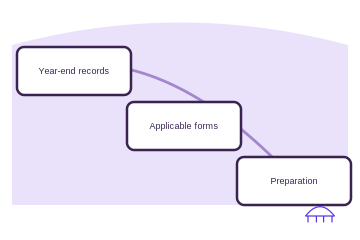
Preparation starts with the relevant entity details, financial records, prior returns, payments, and supporting documents. Missing or inconsistent books may need attention first.
Keep the filing work distinct from any separate cleanup project. Ask who resolves open questions, supplies missing records, and approves the return before submission.
Does the tax benefit fit the bigger decision?
Planning should weigh business purpose, cash cost, timing, and eligibility together. A deductible expense still uses money; a deduction does not reimburse its entire purchase price.
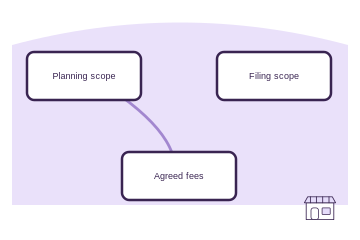
Discuss major purchases or ownership changes before committing. Where a decision also needs legal or other specialist input, clarify the handoff and responsibilities.
03 / LOOK AT THE DIFFERENCE
Two sides.
A clearer decision.
| Consideration | Tax planning | Tax preparation |
|---|---|---|
| Main focus | Evaluate future decisions and expected tax effects. | Report activity for a defined tax period. |
| Typical inputs | Forecasts, current results, prior returns, proposed changes. | Financial records, source documents, entity details, payments. |
| Timing | Before relevant decisions and deadlines. | As records are assembled for applicable return deadlines. |
| Useful outcome | Documented options, assumptions, and next review points. | Prepared returns and a record of filing-related questions. |
Use these distinctions to frame a conversation. The right scope depends on your records, business activity, and the responsibilities agreed for your engagement.
04 / FROM QUESTIONS TO ACTION
A useful conversation
starts with context.
Tell us what is happening, what records are available, and which decisions or deadlines need attention.
Talk through the situation ↗- 01
Name the immediate need
Share upcoming decisions, filing deadlines, estimated-payment concerns, and the condition of your books. Identify what needs attention first.
- 02
Confirm the engagement
Agree the returns, planning questions, records needed, professional responsibilities, review timing, and fees. Do not assume preparation includes year-round planning.
- 03
Connect the next cycle
Use the completed return and current results to identify future review points, while keeping actual transactions and forecast assumptions clearly separated.
CONNECTED CBA SERVICES
Support for the work
behind the question.
QUESTIONS WORTH ASKING
Good questions.
Clear starting points.
Looking for help with your own business?
Let’s talk ↗Do I need both services?
It depends on your decisions, filing obligations, and existing support. Some businesses mainly need preparation; others benefit from reviewing significant changes before they occur. Discuss the scope rather than assuming one service automatically includes the other.
Can planning still help during tax season?
Yes, but distinguish the completed year from decisions still available for the current year. The relevant rules and deadlines determine which options remain open.
Will planning guarantee a smaller tax bill?
No. Results depend on your facts, available options, eligibility, and applicable law. A useful review considers compliance, cash flow, and business goals together.
What should I bring?
Bring recent returns, current financial statements, business-structure information, payment records, and a list of decisions or deadlines. Ask for an agreed secure document-sharing method before sending sensitive records.
YOUR NEXT STEP
Bring the question.
Build some clarity.
Tell CBA Financials what you need help understanding. We’ll discuss the relevant records, available support, and scope before work begins.
Cupertino, California · Find us ↗Send general inquiry details only. Ask how to share financial records securely.