Technology company accounting services. Different models. One clearer picture.
Bring product, service, and operating finances together without flattening their differences.
Technology companies can sell software, equipment, implementation, and ongoing services in the same customer relationship. CBA Financials helps organize the financial records behind those activities, connecting accounting with cash planning and tax conversations so leaders can evaluate the business model they have today and the commitments taking shape next.
Your offer has layers. Let the financial view keep up.
Technology company accounting services organize revenue-related records, costs, operating expenses, and management reports across a company’s business models, supporting cash planning and informed tax preparation discussions for management.
Accounting for technology companies should reflect what customers actually buy. Tech startup accounting also needs a practical view of payroll, contractor spending, and runway. We start with your contracts, billing patterns, and available records rather than assuming every technology business runs on subscriptions or measures success the same way.
CONNECT THE FINANCIAL PIECES
Practical support. Built around the work.
01 / CONNECT THE WORK
Revenue records by business activity
Separate software, hardware, implementation, and support activity where relevant to your business. Connect contracts, billing, and delivery information so accounting questions can be identified before invoice timing becomes the sole explanation of reported revenue for the company.
Organize payroll, contractors, hosting, hardware purchases, and other operating costs consistently. Useful categories help management discuss which costs support delivery and which support development or growth, without assuming every expense has the same accounting or tax treatment.
Bring cash balances, expected customer receipts, payroll, supplier commitments, and planned hiring into a forecast. Compare scenarios for growth or slower collections using explicit assumptions instead of relying on a single headline burn figure without underlying timing context.
Discuss pricing, customer concentration, service capacity, and spending choices alongside financial reports. CFO support can connect the numbers to the company’s current model while distinguishing recurring customer arrangements from one-time projects or equipment sales within management analysis.
Make the financial conversation part of the business conversation.
Choose the situation closest to yours. Bring the detail into the discussion.
01 / PUT THE QUESTION IN CONTEXT
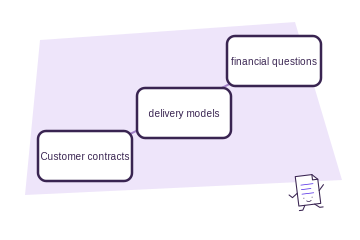
Does one contract include several different promises?
A customer arrangement may combine software access, equipment, implementation, or support. Revenue recognition questions depend on contract facts and the applicable accounting framework, rather than simply the date an invoice is issued.
FASB guidance addresses revenue from customer contracts, including identification of performance obligations. Technical accounting analysis must be agreed where needed, not assumed from general bookkeeping.
Separate recurring arrangements from implementation projects and product sales when reviewing management metrics. Otherwise, a large one-time contract can make a growth trend look more repeatable than the underlying activity supports.
Choose measures that fit the model and document definitions. Recurring-revenue metrics, delivery margins, and customer concentration answer different questions and should not be used interchangeably.
Payroll, contractors, infrastructure, equipment, and annual commitments can produce different cost and cash patterns. A supported expense structure lets management examine those drivers without reducing all spending to a single burn total.
Development and software-related tax treatment can be complex and change over time. Raise material projects for current, fact-specific review rather than assuming immediate deductions or credits.
Hiring dates, contract collections, supplier payments, and fundraising assumptions can move the cash outlook. Model alternatives separately so a forecast makes dependencies visible rather than treating a hoped-for financing round as available money.
Financial planning does not guarantee investment, revenue, or solvency. Keep assumptions current and distinguish management scenarios from independently assured financial statements or valuations for third parties.
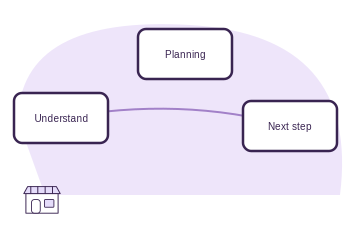
Identify the company’s products, services, billing patterns, and reporting needs before defining routine accounting work and any separately scoped technical accounting analysis.
Connect financial records with relevant contract and cost information, preserving differences between business lines and flagging unresolved classification or revenue questions for review.
Explore
Current finances → operating scenarios → leadership decisions
Use financial reports and explicit assumptions to compare hiring, spending, and collection scenarios while keeping prospective financing separate from cash already available today.
PEOPLE, RECORDS, AND RESPONSIBILITIES
Bring the context. Connect the next step.
Your business knowledge and the financial record belong in the same conversation.
≡
Your business context
Activity, records, upcoming commitments, and the questions your team wants to answer.
↔
The financial conversation
↔
↗
A defined next step
Agreed work, a clear handoff, and the right service for the question.
Connect bookkeeping, accounting, tax, and advisory needs through a scope that fits the business.
No. This page addresses technology companies with software, equipment, implementation, support, or mixed offerings. Describe the actual revenue model so the proposed accounting and planning work reflects your business instead of imposing subscription metrics on every technology company.
Is revenue always recognized when we send an invoice?
Not necessarily. Contract terms, promised goods or services, delivery, and the applicable accounting framework can affect recognition. Material or complex arrangements may need a separately agreed technical accounting review rather than an assumption based on invoice or payment dates.
Can you calculate our runway?
A planning discussion can compare available cash with expected receipts and spending using explicit assumptions. Hiring, contract timing, and financing scenarios can be tested separately. A runway estimate is a scenario, not a guarantee of fundraising, revenue, or solvency.
Are development costs automatically deductible or credit eligible?
No blanket conclusion applies. Development activities, software costs, entity facts, and current tax rules require review. Preserve project and spending records, then discuss relevant treatment with a tax adviser without assuming that every technology expense qualifies for a benefit.