Bookkeeping services for HVAC contractors. Know what each job leaves behind.
Connect installations, service calls, materials, and payroll to a clearer operating picture.
An installation, an emergency repair, and a recurring maintenance visit do not create the same financial trail. CBA Financials helps HVAC contractors organize job income, equipment purchases, technician costs, and operating expenses so busy periods can translate into a better understanding of the business.
From service call to installation. See the financial trail.
Bookkeeping services for HVAC contractors organize job income, materials, equipment costs, payroll, and business expenses to support reporting, tax preparation, and cash planning.
HVAC accounting services work best when the records distinguish installations from repair and maintenance work. Deposits, equipment orders, technician time, callbacks, and service-plan receipts all need context. We help build a consistent financial record flow that supports the owner’s decisions without treating every job or customer payment the same way.
CONNECT THE FINANCIAL PIECES
Practical support. Built around the work.
01 / CONNECT THE WORK
Separate the work types
Organize installation, repair, and maintenance activity using categories that match your operations. Keep the structure practical enough for your team to maintain so differences in job economics do not disappear into one combined sales total.
Associate major equipment and material purchases with the relevant job where records allow. Keep truck stock and general supplies identifiable so costs are not assigned arbitrarily when a supplier invoice covers several different jobs.
Connect payroll summaries with available technician time or job information. Payroll for HVAC companies should have clear responsibilities for approved hours and changes, with callbacks and nonbillable time considered in the management discussion.
Compare equipment deposits, supplier payments, payroll, and customer receipts in a cash forecast. Explore a quieter period or delayed installation payment before committing funds that are needed to keep technicians and vehicles working.
Make the financial conversation part of the business conversation.
Choose the situation closest to yours. Bring the detail into the discussion.
01 / PUT THE QUESTION IN CONTEXT
What happens between the deposit and completion?
Customer deposits and equipment purchases can occur before work is completed. Connect the contract, payment, and job status records so the accounting review can distinguish cash received from the appropriate treatment of the job.
Use agreed billing stages and current project information rather than assuming every deposit is immediately earned revenue or every equipment payment is identical.
Are callbacks visible in the financial discussion?
A return visit can use technician time and materials without producing a new customer invoice. Available job information helps identify that effort so owners can review service economics alongside costs recorded in payroll and purchasing.
Bookkeeping supports the financial view; diagnosing workmanship, warranty responsibility, or service quality remains an operational task for the contractor.
A supplier bill may include an installation unit, replacement parts, and general stock. Keep purchase descriptions and job references available so the accounting categories follow the use of the materials rather than the supplier name alone.
Periodically review how unused stock and equipment purchases are tracked, especially when purchasing activity changes faster than the team’s recordkeeping routine.
Are technical service records the same as financial records?
No. HVAC work can involve technical and refrigerant-related documentation outside ordinary accounting. EPA guidance describes distinct requirements in that area; financial bookkeeping should not be treated as evidence that specialized service obligations have been satisfied.
Keep the contractor’s technical record responsibilities separate while ensuring the accounting team receives the purchase, billing, and cost documentation needed for its work.
Identify work categories, billing stages, supplier records, and technician information that can support a practical and consistent financial record flow.
Connect
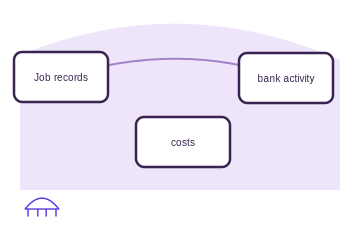
Job records → costs → bank activity
Reconcile payments and expenses, connect major costs to jobs where possible, and flag missing support for deposits, purchases, or billing changes.
Can you distinguish installations from service work?
Yes, we can discuss categories that reflect your operations and the records available. Reliable comparisons depend on consistent job references, purchasing descriptions, and billing information, rather than splitting transactions by guesswork after the period ends.
Will payroll automatically tell me each job’s labor cost?
Not on its own. Useful job labor information requires a reliable link between approved time, payroll records, and job references. We discuss what your current process can support and where additional recordkeeping would help.
Can you help plan for seasonal cash needs?
A cash forecast can compare expected customer payments with payroll, supplier obligations, equipment orders, and overhead. It should use your operating assumptions and show timing risks, rather than promising that seasonal sales will follow a fixed pattern.
Does accounting include refrigerant compliance records?
Specialized technical and environmental obligations are separate from ordinary financial bookkeeping. Agree who maintains those records and consult the appropriate qualified adviser; an organized set of financial statements does not establish that technical service requirements are satisfied.
HVAC CONTRACTORS ACCOUNTING & FINANCIAL SERVICES
KEEP THE BUSINESS MOVING. SEE THE FINANCIAL PICTURE.
Tell us where the financial work needs a clearer connection. Start with a conversation about your business.