Accounting services for self employed. Keep your independence. Find your bearings.
Turn scattered income, expenses, and owner transfers into a clearer financial picture.
When you run the business yourself, financial admin competes with the work clients pay you to do. CBA Financials helps connect everyday bookkeeping with tax preparation and planning so irregular receipts, business expenses, and personal withdrawals are easier to understand before another busy season gets under way.
Accounting services for self employed business owners organize income, expenses, and owner transactions, supporting financial visibility, business tax preparation, and conversations about estimated tax obligations where applicable.
Freelance projects, contract work, and independent businesses can produce uneven income and mixed financial records. Bookkeeping for self employed owners starts with what happened, not just the tax forms received. We discuss your activity, entity structure, records, and tax needs to establish a useful recurring financial process.
CONNECT THE FINANCIAL PIECES
Practical support. Built around the work.
01 / CONNECT THE WORK
Income records beyond a single form
Bring invoices, payment platform summaries, cash receipts, and bank activity together. Keep fees and transfers identifiable so the books describe business income rather than relying only on whichever information returns happen to arrive after the year ends.
Organize supported business spending and identify personal items or mixed-use questions for review. Consistent categories and underlying documents help explain the expense without assuming every payment made from a business account qualifies for a tax deduction.
Discuss estimated taxes using current business results and relevant personal tax context. Tax services for self employed owners should consider changing income and other payments rather than treating a fixed reserve percentage as suitable for every individual.
Separate business costs, owner withdrawals, upcoming commitments, and potential tax payments. A cash plan can help you discuss what the business may need before deciding how much to transfer for personal spending during an uneven trading period.
Make the financial conversation part of the business conversation.
Choose the situation closest to yours. Bring the detail into the discussion.
01 / PUT THE QUESTION IN CONTEXT
Where does the business record begin?
Start with the services or products you sell, how customers pay, and where business spending occurs. A simple account map helps distinguish earned income from transfers, loans, and money contributed personally.
Separate banking can make recordkeeping easier, but supporting documents still matter. Ownership structure and past mixed activity may require additional sorting or catch-up work.
Estimated tax discussions can change when business profit, other income, withholding, or personal circumstances change. Current records make it easier to review assumptions rather than carrying forward an outdated payment amount.
Estimated tax obligations are case specific. Review federal and applicable state requirements with your adviser instead of assuming one schedule or percentage fits everyone.
Record the business purpose and relevant details while the transaction is fresh. Home office, vehicle, travel, and mixed-use costs can require facts beyond a receipt before tax treatment is evaluated.
A bookkeeping category is not a deduction determination. Preserve the support and flag uncertain items for the person preparing or advising on your return.
Taking money out of the business does not automatically create a deductible payroll expense. Owner transactions need treatment appropriate to the business structure, separate from the ordinary costs of serving customers.
Bring entity details and payment practices into the conversation. Compensation, distributions, and payroll questions depend on facts that a bank transfer cannot explain alone.
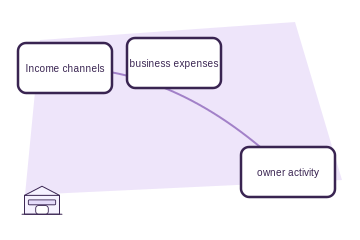
Income channels → business expenses → owner activity
Identify how money enters and leaves the business, gather available records, and distinguish personal transfers from trading activity before organizing the books.
Create a consistent financial record, investigate unexplained items, and review income and expenses so the business picture becomes easier to understand regularly.
Prepare
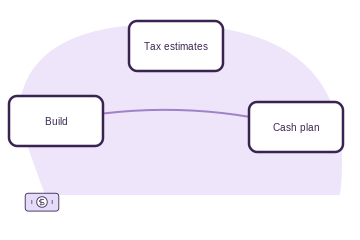
Current results → estimated taxes → filing needs
Use organized records and relevant personal context to discuss tax estimates, preparation documents, and upcoming cash commitments before deadlines or spending decisions arrive.
PEOPLE, RECORDS, AND RESPONSIBILITIES
Bring the context. Connect the next step.
Your business knowledge and the financial record belong in the same conversation.
≡
Your business context
Activity, records, upcoming commitments, and the questions your team wants to answer.
↔
The financial conversation
↔
↗
A defined next step
Agreed work, a clear handoff, and the right service for the question.
Connect bookkeeping, accounting, tax, and advisory needs through a scope that fits the business.
A solo business still needs reliable records of income, expenses, and owner activity. The right level of support depends on transaction volume, complexity, and reporting needs. Discuss a manageable routine instead of waiting for a year-end reconstruction.
Is every Form 1099 amount additional business income?
Information returns must be reconciled with your own records. Do not simply add every form to bank deposits or invoices without checking overlap and adjustments. Missing or incorrect forms also do not replace the need for complete records.
Do self-employed owners always owe quarterly estimated taxes?
Estimated payment requirements depend on the individual’s tax position, including income, withholding, and applicable rules. Many self-employed people need estimated payments, but the appropriate amount and timing require a review of their circumstances rather than a universal assumption.
Can bookkeeping tell me how much I can withdraw?
It provides a clearer starting point by separating operating costs, owner transfers, and current results. A cash discussion adds upcoming bills and tax considerations. The amount available for personal spending still depends on your business obligations and circumstances.
SELF-EMPLOYED ACCOUNTING & FINANCIAL SERVICES
KEEP THE BUSINESS MOVING. SEE THE FINANCIAL PICTURE.
Tell us where the financial work needs a clearer connection. Start with a conversation about your business.