Medical practice accounting services. Make room for financial clarity.
Bring collections, practice overhead, and owner decisions into one accounting conversation.
A full appointment schedule does not explain the practice bank balance. CBA Financials helps organize the financial side of your practice, connecting collection records, operating expenses, payroll, and tax preparation so you can discuss staffing and investment decisions with a clearer understanding of the numbers behind care.
From remittance to report. See the practice behind the payments.
Medical practice accounting services organize financial records, practice expenses, collections, payroll information, and management reports, while distinguishing accounting work from medical billing and clinical administration responsibilities.
Patient receipts, payer remittances, adjustments, and operating costs move on different schedules. Bookkeeping for medical practices should preserve those distinctions. We discuss available financial records and how they connect, then define accounting, tax, or CFO support around your practice’s ownership, reporting needs, and existing billing process.
CONNECT THE FINANCIAL PIECES
Practical support. Built around the work.
01 / CONNECT THE WORK
Collection records with an explanation
Compare financial collection reports and bank receipts with the supporting remittance summaries available from your billing process. Investigate unexplained differences so the books do not rely solely on deposits without context about the underlying payments.
Separate staff costs, occupancy, supplies, professional expenses, and equipment activity into useful categories. A consistent accounting structure makes changes in overhead easier to discuss alongside collections and the practical needs of running your medical practice.
Bring expected collections, payroll, lease payments, and equipment commitments into cash planning. Consider scenarios for slower receipts or an added provider before assuming appointment volume will translate directly into enough cash for the next decision.
Connect supported financial records with entity and owner information when discussing tax services for doctors. Filing requirements, estimated payments, and compensation questions depend on your structure and circumstances, rather than a single rule for every practice.
Make the financial conversation part of the business conversation.
Choose the situation closest to yours. Bring the detail into the discussion.
01 / PUT THE QUESTION IN CONTEXT
Why can a payer payment cover several claims?
CMS explains that one remittance advice can cover multiple claims and include adjustments. Financial reconciliation therefore needs context from the practice’s billing records, rather than an assumption that each deposit equals one visit.
Agree which financial summaries are needed and how to share them appropriately. Medical billing, coding, and claim appeals require a separate service scope.
Look at staffing, rent, supplies, and contracted services over comparable periods. Separate recurring practice overhead from unusual purchases so a single equipment payment does not obscure the underlying operating cost pattern.
Management reporting can help frame questions about capacity and spending. It does not determine clinical staffing standards or replace professional decisions about patient care.
Compare the cost and timing of a new location, provider, or equipment purchase against expected collections. Make the assumptions visible, including ramp-up periods and existing payment obligations that continue during expansion.
CFO support can compare financial scenarios. Demand, reimbursement, financing approval, and investment outcomes remain uncertain and should not be presented as assured results.
Practice returns may need more than a year-end income statement. Keep entity information, owner transactions, financing documents, and equipment invoices available so the preparer can evaluate relevant tax questions in context.
Different ownership structures create different filing and compensation considerations. Review the practice’s facts rather than assuming every doctor files or pays themselves alike.
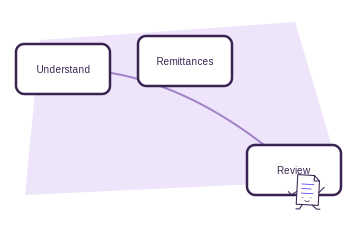
Practice structure → billing summaries → financial needs
Identify the entity, reporting goals, available collection summaries, and existing billing responsibilities before agreeing accounting support and suitable document-sharing arrangements together.
Organize
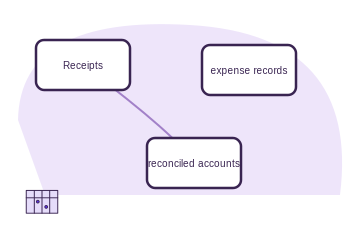
Receipts → expense records → reconciled accounts
Review supported financial transactions, investigate collection differences, and organize overhead consistently so reports provide context for the practice’s ongoing operating decisions.
Discuss
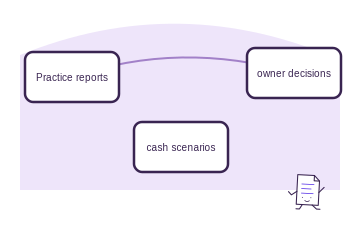
Practice reports → cash scenarios → owner decisions
Use financial reports and stated collection assumptions to discuss upcoming commitments, tax preparation needs, and the practical cash impact of proposed changes.
PEOPLE, RECORDS, AND RESPONSIBILITIES
Bring the context. Connect the next step.
Your business knowledge and the financial record belong in the same conversation.
≡
Your business context
Activity, records, upcoming commitments, and the questions your team wants to answer.
↔
The financial conversation
↔
↗
A defined next step
Agreed work, a clear handoff, and the right service for the question.
Connect bookkeeping, accounting, tax, and advisory needs through a scope that fits the business.
Not by default. This page concerns the financial books, accounting, tax, and planning needs of a practice. Billing, coding, credentialing, and claim appeals are distinct functions that must not be assumed to accompany general accounting support.
Why do payer receipts need supporting summaries?
A payer payment may combine multiple claims and adjustments. Supporting financial summaries help explain the amount received and any remaining differences. The appropriate level of detail depends on the reconciliation work and the agreed information-sharing process.
Can you help plan for a new provider?
A financial planning discussion can compare compensation, overhead, expected collection timing, and ramp-up assumptions. It supports the business decision without guaranteeing reimbursement or demand, and it does not replace clinical or professional judgments about staffing needs.
How should we send practice financial information?
Start by asking which records are required and arranging an appropriate transfer channel. Avoid sending patient details through a general inquiry email. No particular security control, healthcare certification, or clinical system connection is promised by this page.
MEDICAL PRACTICES ACCOUNTING & FINANCIAL SERVICES
KEEP THE BUSINESS MOVING. SEE THE FINANCIAL PICTURE.
Tell us where the financial work needs a clearer connection. Start with a conversation about your business.