
A CLEARER STARTING POINT
Outsourced vs In-House Accounting.
Choose the setup. Keep ownership clear.
Compare accounting workload, review responsibilities, team access, and continuity before deciding who should do the work.

Better records.
✳Clear responsibilities.
✳A practical way forward.

01 / UNDERSTAND THE SITUATION
Start with the facts.
Then make a plan.
In-house accounting assigns work to employees within the business. Outsourced accounting assigns defined work to an external provider. A hybrid setup combines them, for example by keeping transaction context internally while using external accounting review.
The practical question is which arrangement gives your business reliable records and the right support for its workload. A provider cannot supply missing operational context without input, and an employee cannot provide unlimited capacity or every specialist skill. Compare actual duties, access needs, and review coverage rather than choosing on labels alone.
CBA Financials can discuss an outsourced accounting scope around your current team and reporting needs. Share transaction volume, existing systems, reporting deadlines, and unresolved accounting issues. Agree on deliverables, internal responsibilities, communication, and transition arrangements before work begins. An external engagement does not remove management ownership of the business.
02 / FIND YOUR STARTING POINT
Make the next conversation
more useful.
Explore the questions, records, and responsibilities that shape the next step.

Which tasks need someone close to operations?
List transaction processing, reconciliations, schedules, reporting, and questions that depend on daily operational knowledge. Identify the internal person who can explain invoices, contracts, approvals, and unusual activity.
Compare a defined external scope with the actual employee role you would hire. Work left outside either option still needs an owner, including customer disputes, purchase authorization, and document collection.

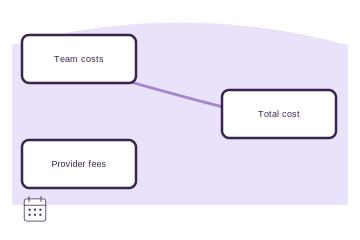
What is the complete cost of coverage?
For an internal team, consider hiring, compensation, benefits, onboarding, tools, leave coverage, and review. For an external proposal, examine the fee, transaction limits, cleanup work, meeting access, and extra projects.
Ask how volume changes affect the arrangement and who provides backup. Compare the cost of the same deliverables rather than assuming outsourcing always produces a fixed percentage saving.
Who checks the work and authorizes payments?
Define preparation, review, and approval separately. Discuss access permissions, handling of sensitive records, account ownership, and the way questions or exceptions are escalated to management.
If payroll duties are outsourced, the IRS notes that employers generally retain responsibility for federal employment tax liabilities. Confirm deposit oversight instead of assuming a vendor relationship transfers the obligation.
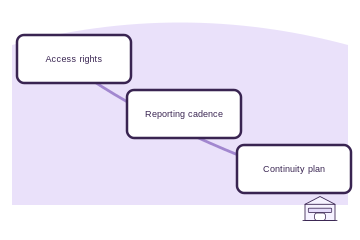
Can the business keep moving when people change?
Document the reporting calendar, open issues, account mapping, and recurring procedures. Decide where working files live and how your business can access its records when an employee leaves or a provider engagement ends.
A hybrid model may fit when internal staff supply context and approvals while an external team handles agreed preparation or review. Define the boundary so tasks are not duplicated or missed.
03 / LOOK AT THE DIFFERENCE
Two sides.
A clearer decision.
| Consideration | Outsourced arrangement | In-house arrangement |
|---|---|---|
| Day-to-day context | Requires a reliable internal handoff | Can sit closer to daily operations |
| Scope | Contracted deliverables and boundaries | Employee role and management priorities |
| Capacity planning | Discuss limits, backup, and added work | Plan recruitment, leave, training, and review |
| Business ownership | Management retains decisions and oversight | Management retains decisions and oversight |
Use these distinctions to frame a conversation. The right scope depends on your records, business activity, and the responsibilities agreed for your engagement.
04 / FROM QUESTIONS TO ACTION
A useful conversation
starts with context.
Tell us what is happening, what records are available, and which decisions or deadlines need attention.
Talk through the situation ↗- 01
Inventory the accounting work
List recurring tasks, deadlines, volumes, system access, and the issues that interrupt the current team. Distinguish routine processing from review and planning.
- 02
Compare like-for-like coverage
Request a written external scope and draft the equivalent internal role. Compare delivery, review, backup, communication, cost, and unassigned tasks.
- 03
Plan the transition
Agree on opening balances, prior records, approval responsibilities, reporting dates, and exit access. Review the arrangement after a few complete reporting cycles.
CONNECTED CBA SERVICES
Support for the work
behind the question.
QUESTIONS WORTH ASKING
Good questions.
Clear starting points.
Looking for help with your own business?
Let’s talk ↗Is outsourced accounting always cheaper?
No. Cost depends on the work, volume, reporting complexity, and coverage. Compare the same deliverables and include the internal time required to supply information, review output, and approve transactions.
Can we keep our bookkeeper and outsource accounting review?
That may be a useful hybrid arrangement. Discuss who records transactions, reconciles accounts, reviews adjustments, and prepares reports. Both sides should understand how questions and corrections move between them.
Will outsourcing transfer our tax responsibilities?
Do not assume that it does. Responsibilities depend on the tax and legal arrangement; employers generally remain responsible for federal employment tax liabilities when outsourcing payroll duties. Confirm oversight and filing responsibilities.
What should an outsourced accounting proposal include?
Look for deliverables, exclusions, reporting dates, review responsibilities, access requirements, communication arrangements, fees, and transition terms. Ask how cleanup, growth in volume, or specialist questions would be handled.
YOUR NEXT STEP
Bring the question.
Build some clarity.
Tell CBA Financials what you need help understanding. We’ll discuss the relevant records, available support, and scope before work begins.
Cupertino, California · Find us ↗Send general inquiry details only. Ask how to share financial records securely.