
Business Tax Planning Services What Happens Before Tax Season Matters Most
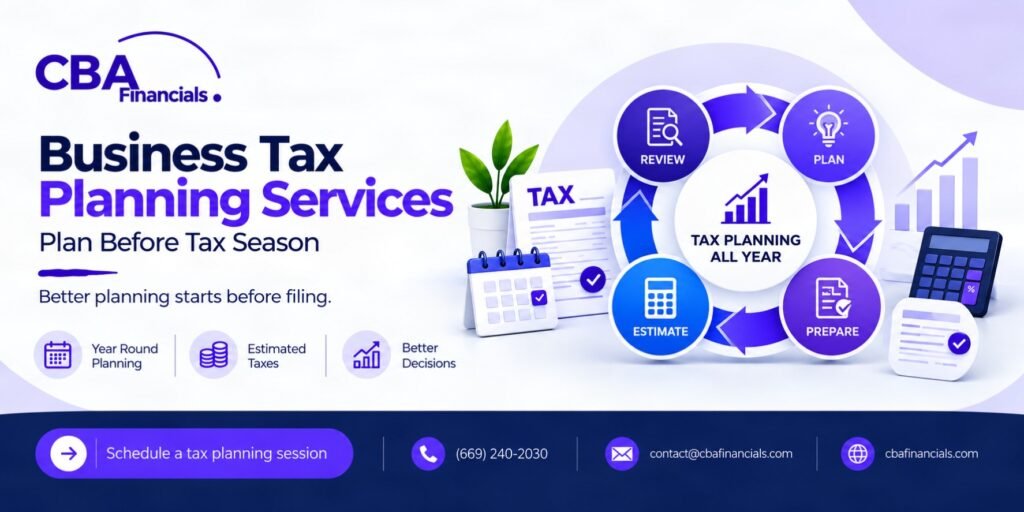
Tax season often gets most of the attention. By the time a tax return is ready to file, however, many important business decisions have already been made. Income has been earned. Expenses have been paid. Employees have been hired. Equipment may have been purchased. Owners may have taken money from the business. Estimated tax payments may already be due. That is why good tax planning starts well before the return is prepared. Business tax planning services help business owners look ahead instead of waiting until filing season to find out what happened. The goal is to review the numbers during the year, understand upcoming decisions, plan for taxes and keep the right records in place. For growing companies, this can make tax preparation more organized and give owners a clearer view of how business decisions may affect their tax position.
What Business Tax Planning Really Means
Tax planning is the process of reviewing your business finances and upcoming decisions before they become final. It can include reviewing
- Business income and expenses
- Estimated tax payments
- Business structure
- Owner compensation
- Payroll
- Major purchases
- Retirement contributions
- Available deductions and credits
- Business investments
- Recordkeeping
- Year-end financial decisions
The exact planning needed depends on the business structure, income level, industry and individual circumstances. Tax planning is also different from tax preparation. Tax preparation looks at what already happened and prepares the required returns. Tax planning looks forward and asks what decisions should be considered before the year ends. Both matters, but they serve different purposes.
Why Tax Planning Should Start Before Tax Season
Waiting until tax season can leave very little room to make useful changes. For example, a business owner may discover during tax preparation that estimated payments were too low, records are incomplete or a major business decision had tax consequences that were not considered earlier. The IRS explains that federal income tax generally follows a pay as you go system. Businesses and self- employed individuals may need to make estimated tax payments during the year. Planning earlier gives the business more time to review its position and make informed decisions. This does not mean every business needs complicated tax strategies. In many cases, good planning starts with understanding the numbers and asking the right questions at the right time.
What Small Business Tax Planning Services Can Include
Small business tax planning services can cover several areas depending on the needs of the business.
Reviewing Business Income
Tax planning starts with knowing how the business is performing. If revenue is increasing faster than expected, the tax position may also change. A business that has a slower year may need a different approach. Regular financial reviews help identify these changes before filing season.
Planning Estimated Tax Payments
Estimated taxes are an important part of year-round tax planning. Sole proprietors, partners and S corporation shareholders generally may need estimated payments when they expect to owe at least $1,000 when filing. Corporations generally may need estimated payments when they expect to owe at least $500. Specific rules and exceptions apply. Planning can help business owners avoid simply guessing what they may owe. If income changes during the year, estimated payments may also need to be reviewed. The IRS allows estimated tax calculations to be adjusted when circumstances change.
Reviewing Business Structure
The way a business is structured can affect how income is reported and what taxes apply. A business may operate as a sole proprietorship, partnership, corporation or an LLC with a particular tax election. The right choice depends on the business and its circumstances.
A tax planning review can help determine whether the current structure still makes sense before major changes are made. This is especially important for businesses that are growing, adding owners, changing compensation or considering a different ownership arrangement.
Reviewing Owner Compensation
Owner compensation can become more important as a business grows. Planning may involve looking at salary, distributions, payroll requirements and the overall relationship between business income and owner payments. The details depend heavily on the business structure, so these decisions should be reviewed with the appropriate tax professional before changes are made.
Reviewing Major Purchases
Buying equipment, technology, vehicles or other business assets can affect both cash flow and taxes. A tax planning review can help a business understand the possible tax treatment before making a major purchase. The important point is that a purchase should make business sense first. A tax benefit alone is not a good reason to spend money the business does not need.
Improving Documentation
Good tax planning depends on reliable information. The IRS states that business records should clearly show income and expenses and should support items reported on tax returns. That means receipts, invoices, payroll records, bank activity and other supporting documents need to be organized throughout the year. Better records make planning easier and can reduce the amount of cleanup needed before filing.
A Tax Planning Service for Business Should Look Beyond Filing
A tax planning service for business should not be limited to telling you what you owed last year. A useful planning process should help you understand what may happen next. For example, a business owner might ask How much tax should I set aside this year? Are my estimated payments still appropriate?
Has my business structure changed enough to review? What major purchases are coming up? Has my income changed significantly? Are my books current enough for reliable planning? Are there decisions I should make before year end? What records should I keep to support my return? These questions can lead to better decisions when they are addressed early.
When Should a Business Start Tax Planning
There is no single month that works for every company. For many businesses, a quarterly review can be more useful than waiting for one large meeting at the end of the year. A simple year-round approach may look like this
Beginning of the Year
Review the previous tax return and current business expectations.
During the Year
Monitor income, expenses, estimated payments and major business changes.
Before Year End
Review possible year end decisions and make sure important records are available.
Before Filing
Confirm that the books and supporting documents are ready for tax preparation.
After Filing
Use the completed return as a starting point for the next planning cycle. This approach helps make tax planning part of normal financial management instead of a once a year task.
Signs Your Business May Need Tax Planning
Tax planning becomes more useful as business activity becomes more complicated.
You may want to consider professional planning if
- Your revenue has increased significantly
- Your business income changes from year to year
- You are unsure about estimated tax payments
- You are considering a change in business structure
- You are hiring employees
- You are making large business purchases
- You have multiple income sources
- Your business records are difficult to organize
- You are taking larger owner payments
- You want to understand tax consequences before making business decisions
These signs do not automatically mean you need a full tax planning engagement. They are simply reasons to start the conversation earlier.
If several of these situations sound familiar, talk with CBA Financials about a year-round tax planning approach built around your business.
Talk With a Tax ProfessionalTax Planning and Tax Preparation Are Not the Same
The difference is simple. Tax preparation focuses on reporting what already happened. Tax planning focuses on decisions that may affect what happens next. For example, tax preparation may report the income your business earned last year. Tax planning may review expected income this year and help you understand estimated payments and other decisions that could affect your tax position. Neither replaces the other. A good process connects planning with preparation so the information gathered during the year can be used when the return is prepared.
How to Choose Business Tax Planning Services
Not every business needs the same level of support. Before choosing a provider, ask how the planning process works and what is actually included.
Consider asking
- Will you review my business numbers during the year?
- How often will we review the plan?
- Do you help with estimated tax planning?
- Will you review business structure when appropriate?
- How do you handle year end planning?
- What information do you need from my business?
- How are recommendations documented?
- Who will handle implementation questions?
- Does the service connect with tax preparation?
It is also important to understand fees before beginning an engagement. A clear planning process should explain what you are paying for and what information the provider needs from you.
What Our Competitor Research Shows Is Often Missing
Many tax planning pages focus heavily on tax savings or lists of possible deductions. That can leave out an important part of the conversation. Business owners also need to understand when planning should happen, what information is needed and how decisions connect to cash flow and business operations. That is why this guide focuses on practical planning areas such as estimated taxes, business structure, owner decisions, financial records and year end preparation. Tax planning is not simply about finding another deduction. It is about making informed decisions before the opportunity to act has passed.
How Better Records Support Tax Planning
Planning becomes difficult when the financial information is incomplete. The IRS notes that good business records help owners monitor business progress, prepare financial statements, identify income, track deductible expenses and prepare tax returns. For that reason, tax planning should work alongside regular bookkeeping and accounting. If the books are months behind, it becomes harder to estimate current year income or understand whether tax payments are keeping pace with the business. Clean financial information gives the tax professional a better starting point.
Why Year-Round Tax Planning Can Be More Useful for Growing Businesses
A growing business can change quickly. Revenue can increase. New employees can be added. Owners can change how they take money from the business. New equipment can be purchased. A second location may be opened. Each decision can create financial and tax questions. Waiting until the tax return is being prepared means many of those decisions have already happened. Year-round planning creates more opportunities to review them while there is still time to act.
A Simple Business Tax Planning Checklist
Before your next tax planning meeting, gather
- ☐ Current year financial statements
- ☐ Prior year tax return
- ☐ Estimated tax payment information
- ☐ Payroll information
- ☐ Major purchase details
- ☐ Business ownership information
- ☐ Records for major income and expenses
- ☐ Information about planned business changes
- ☐ Questions about your business structure
- ☐ Questions about upcoming tax decisions
Having this information ready can make the planning conversation more productive.
Final Thoughts
Tax planning should not begin when the tax return is already sitting on the desk. For growing businesses, the more useful questions often come earlier.
What will income look like this year?
Are estimated payments keeping pace?
Has the business changed enough to review its structure?
Are important records being maintained?
Are there major decisions coming before year end?
These are the conversations that make business tax planning services different from simply preparing a tax return. If you want to understand your tax position before filing season arrives, Schedule a tax planning session and start the conversation while there is still time to make informed decisions.
Stop digging through spreadsheets for answers you need right now.
